Vedic astrology is one of the oldest systems of astrology, originating in ancient India more than 5,000 years ago. It is also known as Jyotish Shastra, meaning the science of light.
This ancient system is based on the actual astronomical positions of planets and stars. Unlike modern astrology systems, Vedic astrology follows the sidereal zodiac, offering precise planetary calculations.
In this guide, you will learn what Vedic astrology is, how it works, its key elements, and why millions of people still follow it today.
What Is Vedic Astrology?
Vedic astrology is an ancient system of astrology that originated in India thousands of years ago. It is also known as Jyotish Shastra, which means the science of light. This system focuses on understanding how planetary energies influence human life and destiny.
Unlike belief-based astrology systems, Vedic astrology is deeply connected with astronomy. It studies the real-time movements and positions of planets, the Sun, and the Moon at the moment of a person’s birth. These celestial positions are used to create a birth chart, also called a Kundli.
A Kundli acts as a cosmic blueprint of an individual’s life. It reveals personality traits, strengths, weaknesses, karmic patterns, and potential life events. Every planet, house, and zodiac sign represents specific areas such as career, marriage, education, health, finances, and spirituality.
Vedic astrology does not claim that life is fixed or unchangeable. Instead, it explains tendencies and timings. Through planetary periods known as Dashas, it helps identify favourable and challenging phases of life.
The primary goal of Vedic astrology is guidance and self-awareness. By understanding planetary influences, individuals can make better decisions, improve personal growth, and align their actions with cosmic timing.
Origin of Vedic Astrology
The origin of Vedic astrology can be traced back to ancient India more than five thousand years ago. It developed during the Vedic period and is closely connected with the sacred Hindu scriptures known as the Vedas, especially the Rig Veda and Atharva Veda.
In ancient times, great sages and rishis observed the movements of celestial bodies and their effects on life on Earth. Through long-term study and meditation, they discovered patterns linking planetary motion with human experiences. This knowledge was preserved through oral traditions and later documented in classical texts.
Vedic astrology evolved as a part of Vedanga, the six auxiliary disciplines of the Vedas. Among these disciplines, Jyotisha was developed to calculate auspicious timings for rituals, ceremonies, and important life events.
Several classical texts contributed to the foundation of Vedic astrology, including Brihat Parashara Hora Shastra, Saravali, and Jataka Parijata. These texts describe planetary characteristics, zodiac signs, houses, yogas, and predictive principles that are still followed today.
Over centuries, this ancient science was passed from teacher to student, preserving its authenticity. Despite modern advancements, the core principles of Vedic astrology remain unchanged, making it one of the oldest continuously practiced astrological systems in the world.
How Vedic Astrology Works
Vedic astrology works by analyzing the precise positions of celestial bodies at the exact moment of a person’s birth. These planetary positions are calculated using the individual’s date, time, and place of birth, forming a detailed birth chart known as a Kundli.
The birth chart is divided into twelve houses, each representing a specific area of life such as personality, wealth, career, relationships, health, and spirituality. The placement of planets within these houses influences how different life aspects function.
Vedic astrology uses the sidereal zodiac, which is based on fixed constellations in the sky. This system reflects the actual astronomical location of planets, making calculations more precise compared to other astrology systems.
In addition to planets and houses, Vedic astrology places great importance on nakshatras (lunar constellations). There are twenty-seven nakshatras, each carrying unique qualities that strongly affect personality traits and mental tendencies.
Another important principle is the Dasha system, which reveals planetary time periods operating in a person’s life. Dashas help determine when specific planets become active and influence events such as career growth, marriage, education, or challenges.
By studying planetary combinations, aspects, strengths, and timing, Vedic astrology provides insight into life patterns and potential outcomes, offering guidance rather than fixed predictions.
Key Elements of Vedic Astrology
Vedic astrology is built upon several important components that work together to form a complete horoscope analysis. Each element plays a unique role in understanding an individual’s life path and personality.
The first key element is the nine planets, known as the Navagraha. These include the Sun, Moon, Mars, Mercury, Jupiter, Venus, Saturn, Rahu, and Ketu. Each planet represents specific energies such as intelligence, emotions, discipline, wisdom, and desires.
Another major element is the twelve zodiac signs (Rashis). These signs determine how planetary energies express themselves. For example, fiery signs bring action and confidence, while earth signs emphasize stability and practicality.
The twelve houses form the structural framework of the birth chart. Each house governs a particular area of life, including education, profession, marriage, family, health, and spiritual growth.
Vedic astrology also emphasizes twenty-seven nakshatras, or lunar constellations. Nakshatras provide deeper insight into mental behavior, emotional nature, and karmic tendencies.
Additional concepts such as planetary aspects, yogas, strength and weakness of planets, and dashas help astrologers interpret timing and intensity of life events.
Together, these elements create a comprehensive system that explains both inner personality traits and external life experiences.
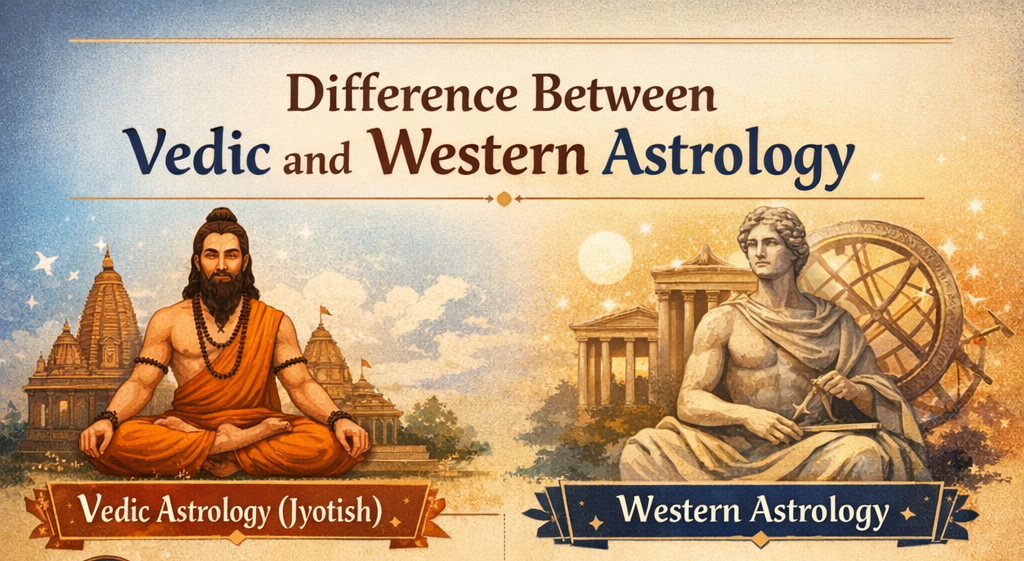
Difference Between Vedic and Western Astrology
The main difference between Vedic astrology and Western astrology lies in the method used to calculate planetary positions. Vedic astrology follows the sidereal zodiac, which is based on the actual positions of stars and constellations in the sky.
Western astrology, on the other hand, uses the tropical zodiac, which is calculated based on the Sun’s position relative to the seasons. Because of this difference, planetary placements in both systems usually vary by about 23 to 24 degrees.
Another major distinction is the importance of the Moon and nakshatras in Vedic astrology. Vedic astrology places strong emphasis on lunar constellations to understand mental patterns, emotional behavior, and karmic influences. Western astrology primarily focuses on Sun signs.
Vedic astrology also includes the Dasha system, which identifies specific planetary periods influencing a person’s life. This timing system plays a crucial role in predicting life phases, whereas Western astrology mainly relies on transits and progressions.
Additionally, Vedic astrology gives great importance to planetary strength, dignity, and yogas, providing deeper insights into life events. Western astrology tends to focus more on psychological traits and personality analysis.
Both systems have their value, but Vedic astrology is widely known for its detailed calculations and precise timing techniques.
Importance of Birth Chart (Kundli)
The birth chart, also known as a Kundli, is the foundation of Vedic astrology. It is created using the exact date, time, and place of birth, representing the planetary positions at the moment an individual is born.
A Kundli acts as a life map that reflects personality traits, talents, challenges, and karmic influences. Each planet’s placement within a specific house and zodiac sign reveals how different areas of life are likely to function.
The twelve houses of the birth chart govern important aspects such as education, career, marriage, finances, health, family, and spiritual growth. By studying these houses, astrologers can understand where opportunities and obstacles may arise.
The birth chart also helps determine planetary strengths and weaknesses. Benefic planets can bring support and growth, while challenging placements may indicate lessons that require effort and awareness.
Through the analysis of planetary aspects, yogas, and dashas, the Kundli provides insight into life timing. It helps identify favorable periods for progress as well as phases that require patience and discipline.
Rather than predicting fixed outcomes, the birth chart serves as a guide for understanding life patterns and making informed decisions.
Benefits of Learning Vedic Astrology
Learning Vedic astrology provides deeper understanding of oneself and life experiences. It helps individuals recognize their natural strengths, weaknesses, talents, and behavioral patterns through planetary influences.
One of the major benefits is self-awareness. By studying the birth chart, a person can better understand emotional tendencies, decision-making style, and life motivations. This awareness supports personal growth and emotional balance.
Vedic astrology also helps with timing and planning. Through planetary periods and transits, individuals can identify favorable phases for education, career development, business, and personal goals, while remaining cautious during challenging periods.
Another important benefit is clarity in life direction. Astrology encourages thoughtful decision-making instead of impulsive choices, helping people align efforts with suitable opportunities.
Learning astrology also strengthens spiritual understanding. It teaches the concept of karma, free will, and responsibility, promoting patience and discipline rather than fear.
Most importantly, Vedic astrology is not meant to create dependency. Instead, it serves as a guidance system that encourages conscious action, confidence, and personal improvement through awareness and knowledge.
Conclusion
Vedic astrology is an ancient system of knowledge that combines astronomy, philosophy, and spiritual insight. Rather than focusing on fear or fixed predictions, it emphasizes understanding life patterns, timing, and personal growth.
By studying planetary positions, houses, nakshatras, and dashas, Vedic astrology helps individuals gain clarity about their strengths, challenges, and opportunities. Its purpose is to provide guidance that supports informed decision-making and self-awareness.
As a subject rooted in thousands of years of observation and tradition, Vedic astrology continues to remain relevant in modern life. When approached with learning and awareness, it can serve as a valuable tool for understanding karma, improving consciousness, and aligning actions with cosmic rhythms.